
Lake Garda is one of the most beloved tourist destinations in Italy, thanks to its natural beauty, mild climate, and the variety of activities it offers. In such an enchanting area, many owners of apartments, villas, and holiday homes choose to entrust the management of their properties for short-term and tourist rentals. These accommodations, with their unique features, attract visitors from all over the world, eager to experience an exclusive stay in one of the most picturesque locations in the country.
However, starting from January 2025, the entire short-term rental sector will be subject to stricter new regulations with the introduction of the National Identification Code (CIN), which imposes specific obligations on all hosts. While this ensures greater transparency and security, it also imposes a series of bureaucratic requirements that property managers cannot ignore.
Let’s take a closer look at what the CIN is, how to obtain it, why it’s important, and what penalties hosts may face if they fail to comply with this new regulation.

The Banca Dati delle Strutture Ricettive (BDSR) is a digital system established by the Ministry of Tourism, designed to collect all information related to Italian accommodations (such as hotels, bed & breakfasts, guesthouses, campsites, etc.). The goal of this platform is to ensure transparency and quality in the tourism sector, allowing tourists and operators to access verified information about accommodations. Any structure that wishes to operate must be registered in the system, and this is where the CIN comes into play.

The CIN (Codice Identificativo Numerico) is a unique and identifying code that every accommodation provider/owner/manager of a short-term rental must obtain upon registration in the BDSR and apply to the rental listing. This code is intended to uniquely identify each property across Italy and ensure that it is legally registered and compliant with tourism regulations. The CIN is crucial both for industry operators and tourists, as it facilitates the consultation and verification of the property’s authenticity. This code allows the relevant authorities to monitor short-term rentals in a centralized manner, simplifying the process of control and verification, and ensuring that hosts comply with all fiscal and administrative regulations.
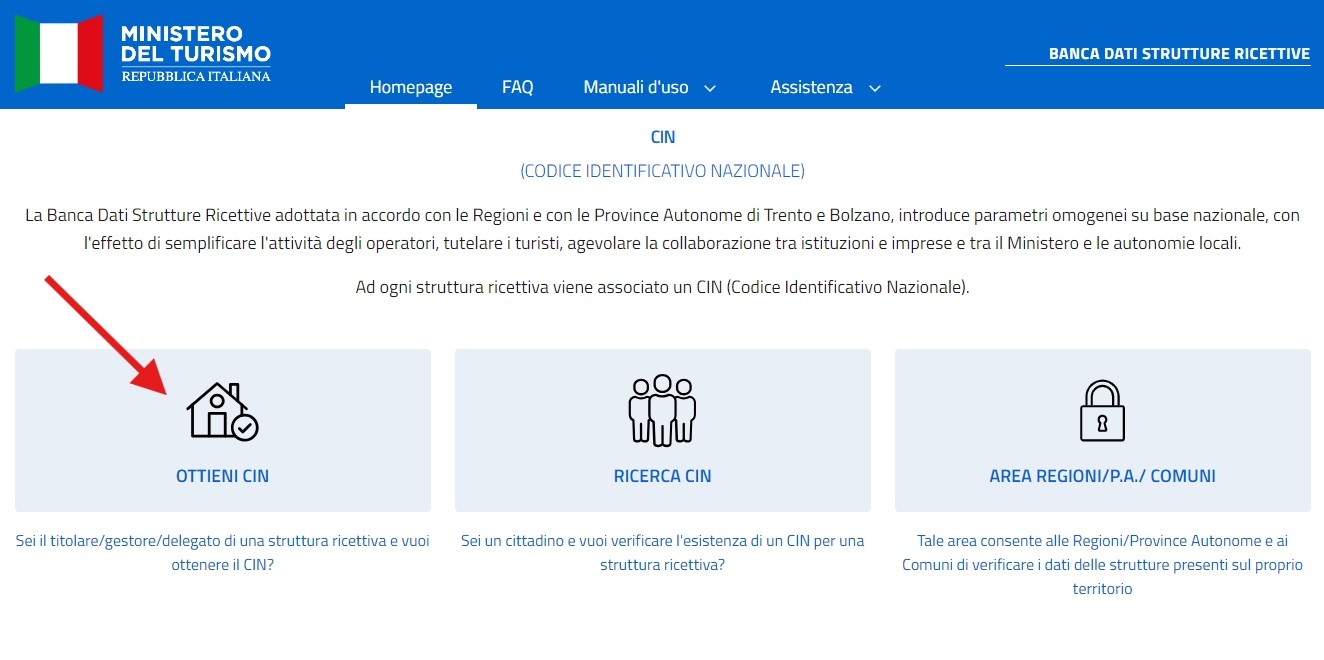
To obtain the CIN, accommodation managers must first register on the official BDSR portal on the Ministry of Tourism’s website, filling out a form with all the required information, including:
Once the registration is completed and the information is verified, the property will receive the CIN, which must be displayed visibly to ensure transparency to both tourists and the relevant authorities.
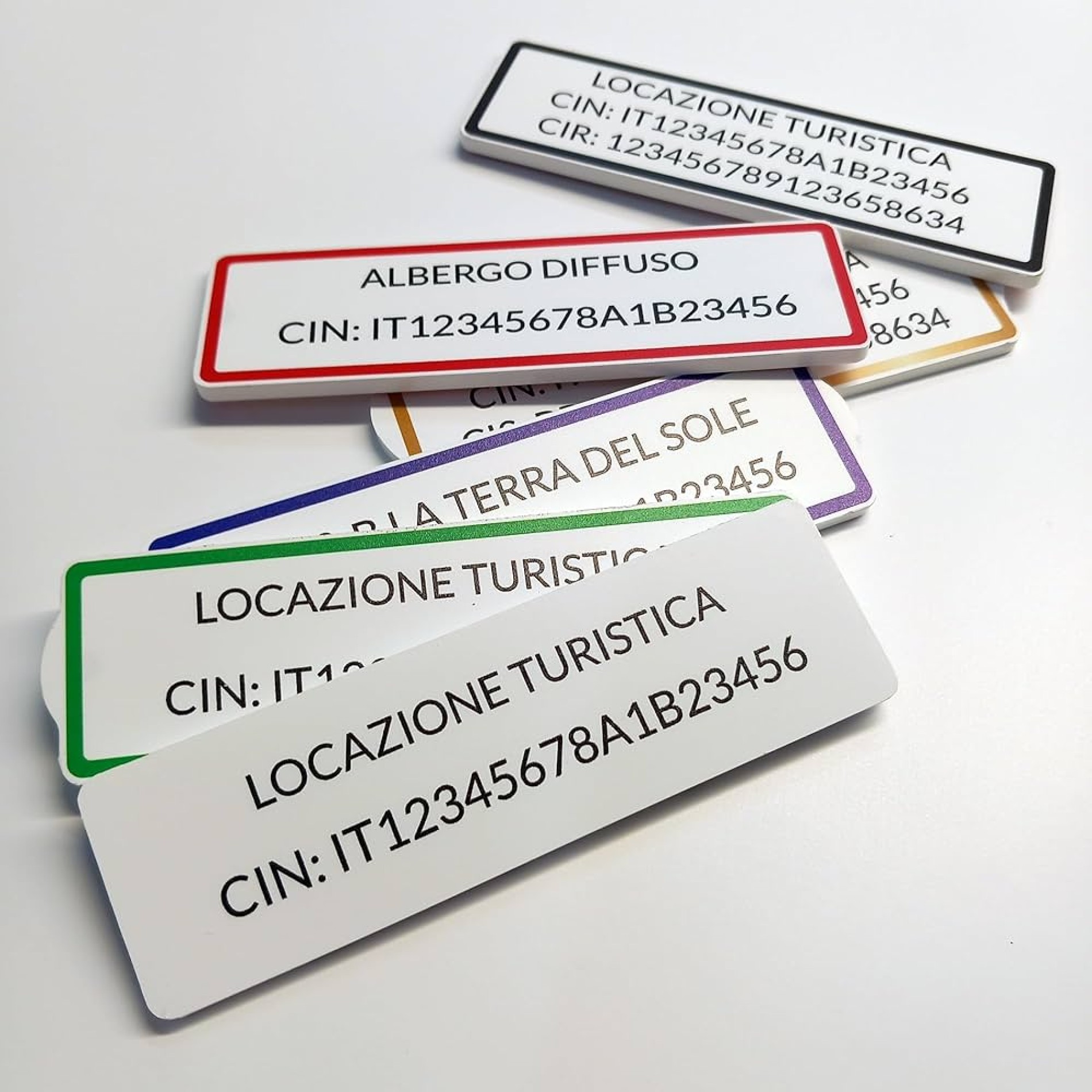
Every establishment must display the CIN in a visible manner both inside and outside the property, as required by regulations. The code must be included in official booking documents, contracts with clients, and in some cases, also on the website or online booking platforms, to ensure it is easily accessible. As mentioned earlier, the CIN is crucial for the management and inspection of the property by the relevant authorities, such as the Ministry of Tourism, which uses it to monitor the registration and compliance of accommodation facilities with current regulations.
The CIN (Numerical Identification Code) is mandatory for all Italian accommodation facilities as it is a tool for regulating and monitoring the tourism sector. Its introduction was wanted by the Ministry of Tourism to ensure that all operating facilities are officially registered and comply with regulations, increasing transparency and the quality of the tourism offering.
The CIN requirement has a significant impact both for facility managers and tourists. For managers, it represents a condition of legitimacy and a means to operate legally in the tourism market. For tourists, the CIN is a guarantee of reliability, as it allows them to verify that the facility is correctly registered and meets regulations concerning safety, hygiene, and service quality.
Additionally, the CIN allows centralized monitoring of establishments, facilitating access to precise and timely information for both tourists and relevant authorities.
The deadline to request the CIN was set for January 1, 2025. This date represents the cutoff by which accommodation facilities had to comply with the new regulations, ensuring uniformity of rules at the national level. Starting from January 2, 2025, facilities that have not obtained, displayed, or published the CIN will be subject to penalties.

The absence of the CIN results in penalties for accommodation facility managers. According to current regulations, those who do not register in the Accommodation Facility Database and fail to obtain the CIN risk significant fines and, in some cases, suspension or revocation of their operating license. Penalties may vary depending on the severity of the violation but generally include:
Administrative Fines: Unregistered facilities or those without a CIN may be fined amounts depending on the type of facility and the duration of the violation.
Revocation of Authorization: In cases of failure to register and continued operation without the CIN, the relevant authorities may decide to revoke the authorization to operate as an accommodation facility.
Advertising Restrictions: Non-compliant facilities may also face restrictions on the use of online booking platforms that require the CIN to publish offers.
The registration requirement and the assignment of the CIN are thus safeguards for both the quality of service and the security of the sector, making compliance with this regulation essential for the regularity of accommodation facilities.

In the short-term rental sector, in-person check-in is crucial to comply with safety regulations and ensure accurate guest registration. This process includes verifying identity documents, collecting necessary information for the Accommodation Facility Database, and providing useful information for the stay. The presence of an operator ensures that every step is carried out correctly and allows for addressing any questions or needs guests may have upon arrival.

However, while in-person check-in is essential for initial registration, the introduction of smart locks offers a significant advantage for managing specific situations that may arise during a stay.
Smart locks are electronic devices that allow guests to access rooms autonomously using smartphones, numerical codes, or RFID cards. These systems are particularly useful in two common situations.
The first concerns delays in transport, such as flights or trains arriving late. In these cases, guests may arrive late at night or at times that do not align with traditional check-in hours. Smart locks allow them to access the property and room autonomously without waiting for staff intervention.
The second situation concerns the need for internal maintenance within the property. If maintenance work is needed during the stay (such as an urgent repair or equipment replacement) and the guests are out for sightseeing or visiting local attractions, like around Lake Garda, the smart lock allows technicians to enter the accommodation without disturbing the guests. This ensures the property maintains service quality without interrupting the guest's stay, allowing them to enjoy their day away from the room.
To sum up, while in-person check-in remains essential for initial registration and verification, smart locks offer a practical and flexible solution that enhances the guest experience during their stay, enabling autonomous access in case of delays or when maintenance is necessary without disturbing the guests' leisure time.

When our buyers acquire a property on Lake Garda, they often realize they won't be able to use it year-round. To solve this, we offer short-term rental management through Booking Garda Lake, which provides an optimal solution for maximizing the property's potential. Thanks to their experience in the sector, we ensure that every aspect of the management is meticulously handled, from property promotion to booking management, maintenance, and customer service.
First of all, their ability to anticipate regulations and adapt promptly to legislative changes, such as the introduction of the CIN, has made our partnership even stronger and more advantageous. Not only can they manage properties with maximum efficiency, but they also ensure a high level of security with in-person check-ins and the use of smart locks for greater flexibility and autonomy for guests. Their proactivity and continuous updates on regulations make BGL the ideal partner for those who wish to rent their property without concerns. Thanks to their proven experience, our clients can be confident that their investment will be optimized, achieving positive results in terms of occupancy and profitability.
The introduction of the CIN requirement marks an important change in the short-term rental landscape in Italy. Although regulations may seem complex, compliance is essential to avoid penalties and ensure transparent and safe property management. The use of smart locks and ensuring in-person check-ins are equally essential to meet the new needs of guests and offer service that meets expectations. With partners like Booking Garda Lake, who already implemented these solutions before they became mandatory, hosts on Lake Garda can navigate the new regulatory framework with greater peace of mind, knowing they can rely on expert and proactive support.
If you are interested in renting out your second home and would like a personalized return plan, or if you want to learn more about the services available to you, visit the website www.bookinggardalake.it. We would be happy to show you how we can help you maximize the potential of your property.